
Do as the Danes do - bike to work!
June 2026
In Copenhagen, a third of people cycle to work and school - far more than in Sweden. Cycling to work is an easy way to reduce your climate footprint, and with an e-bike or e-moped you can go further without breaking a sweat.

Did you know that in Copenhagen a third of people cycle to school and work? That's far more than the average in Sweden. A recent survey shows that a third of people employed in Sweden could cycle to work in just 15 minutes - are you one of them?
Results from the national travel survey show that cycling to work clearly varies between the summer and winter halves of the year in Sweden. During the summer half, around 21 percent of Swedes cycle to work more than four times a week. During the winter half, that share drops to 13 percent.
It's above all focused urban planning, with new pedestrian and cycle bridges across the water in the harbour area, that has helped the number of cyclists rise quickly in Copenhagen. But the general attitude towards travelling in an eco-friendly way and the arrival of e-bikes have played a part too. Do you think we Swedes can catch up with our Danish neighbours? How does it look for you? Do you already cycle, or could cycling to work more be a way to reduce your climate footprint? Do you have colleagues you could motivate to do the same?

We've put together a couple of tips for successful bike commuting: 1. Champion the cause of a bike-friendly workplace For you and your colleagues to choose the bike, it helps to have secure storage for the bikes, somewhere to change and so on. Team up with your colleagues and see what you can do. Your employer can become certified as a "bike-friendly workplace" by meeting at least 5 of these criteria.

2. Consider investing in an e-bike or e-moped if you have a long way to go An e-bike costs more than an ordinary bike, but it also has plenty of advantages. It helps you up hills and into headwinds and gives a smooth ride, so you can avoid getting too hot. With an e-bike you can travel longer distances at 25 km/h, which means a 5 km commute takes just 12 minutes.
Do you have a much longer way to work? Or simply don't feel like pedalling? Then perhaps an e-moped could be a good alternative? With an e-moped you can commute the climate-smart way at 45 km/h, with a range of over 70 km per charge.
Do you know your climate impact?
With the ClimateHero climate calculator, you can measure your footprint in 5 minutes!
More climate-smart tips

Let your money work for the planet
It's not just what we consume that affects the climate - our savings and investments do too. By choosing sustainable funds, avoiding fossil fuels and moving your savings to a green bank, you can let your money work for the planet.
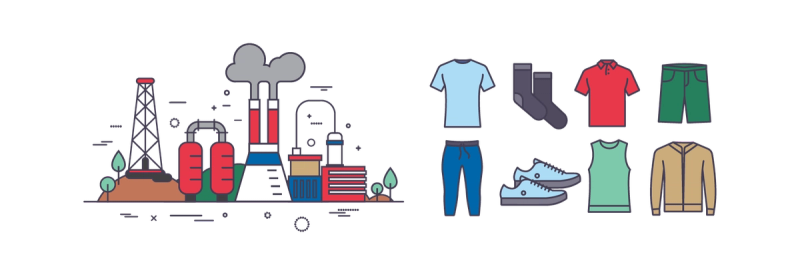
Slow fashion - how to shrink the climate footprint of your clothes
The fashion industry accounts for around 10% of the world's climate emissions - twice as much as flying. By using and mending the clothes you have, shopping circular and choosing climate-smart materials, you can shrink the climate footprint of your wardrobe.

Fight food waste
Almost 40% of all the food we produce ends up as waste, and half of food waste happens at home in the kitchen. With six simple tricks - plan ahead, store food properly and make the most of leftovers - you can cut your food waste and save both money and the climate.

Shrink the climate footprint of new purchases
20-30% of our climate footprint comes from buying clothes and gadgets. With seven golden rules - buy fewer but better things, choose second-hand and repair what you already own - you can shrink the footprint of what you buy.

Do as the Danes do - bike to work!
In Copenhagen, a third of people cycle to work and school - far more than in Sweden. Cycling to work is an easy way to reduce your climate footprint, and with an e-bike or e-moped you can go further without breaking a sweat.

Start cutting back on plastic
Since plastic was introduced in the 1950s we've produced over eight billion tonnes - and only 9% has been recycled. With four simple habits you can reduce your plastic use and your climate footprint starting today.

Learn to cook vegetarian food
Eating more plant-based food is one of the easiest ways to shrink the climate footprint of your meals - by up to 80%. By trying a vegetarian meal kit you'll learn new recipes and discover just how tasty and varied green food can be.

Choose renewable electricity
Producing electricity and heat accounts for roughly 30% of the world's greenhouse gas emissions. By switching to a green electricity contract you can cut the climate footprint of your power use by more than 90% - and it doesn't have to cost more than your current contract.