
Slow fashion - how to shrink the climate footprint of your clothes
June 2026
The fashion industry accounts for around 10% of the world's climate emissions - twice as much as flying. By using and mending the clothes you have, shopping circular and choosing climate-smart materials, you can shrink the climate footprint of your wardrobe.
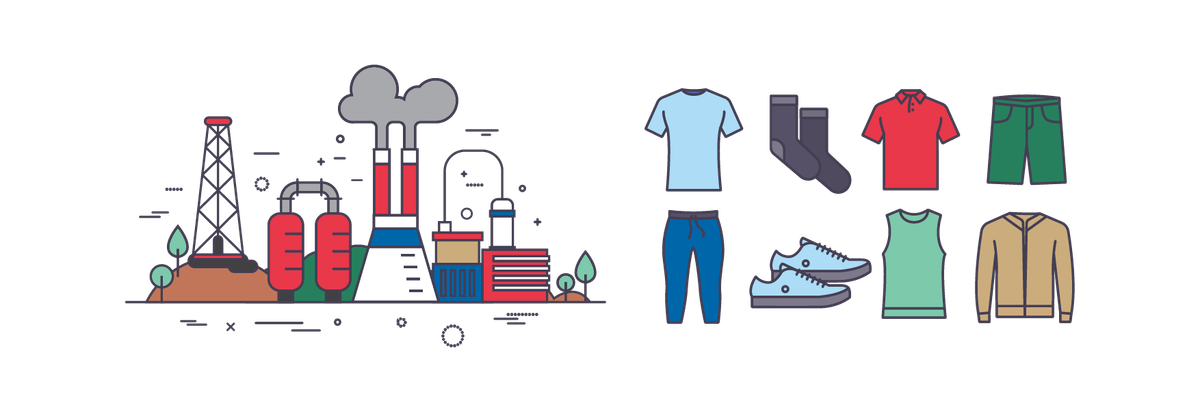
Did you know that the fashion industry accounts for around 10% of the world's total climate emissions? That's double the impact of the aviation industry, and only topped by the oil industry.
According to the Swedish Environmental Protection Agency, we Swedes buy on average 13-14 kg of clothes per person each year. At the same time, we throw away 7 kg. Fashion companies have developed ever faster and more efficient production cycles, and as the price of clothes has fallen, we consumers have increasingly come to view clothing as a throwaway item. So what can I, as a consumer, do to shrink the climate footprint of my clothes?
1. Use, care for and mend the clothes you have

The average garment is worn only ten times before it's thrown away, which drives demand for new clothes. Since almost 80 percent of the climate footprint occurs in the manufacturing of new garments, the most effective way to cut your footprint is to use the clothes you already have for longer, instead of buying new ones. Caring for and mending the clothes you have is therefore smart for both your wallet and the climate. For anyone who isn't handy at mending clothes themselves, or doesn't have a tailor nearby, we can recommend repamera.se. There you can order repairs and tailoring of clothes, wherever you live in Sweden.
2. Shop circular

When you need to add to your wardrobe, consider whether you really have to buy new garments. Can you get the item second-hand? Clothes are a popular category on sites like Blocket, Tradera, Sellpy, Myrorna and Facebook Marketplace. You're usually surprised at how good the selection and quality you can actually find second-hand really are. Clothes-swap days are another good initiative that's becoming increasingly popular. Also consider whether you even need to own the garment at all. Today there are several companies offering services where you rent clothes instead.
3. Choose climate-smart materials

When you do need to buy new garments, bear in mind that the choice of material has a big impact. Cotton and polyester are the most common materials in the fashion industry. Cotton is unfortunately extremely resource-intensive to grow and process. Polyester is no better, since it's made from fossil oil and causes major problems with microplastics. A climate-smart alternative is bamboo, the world's fastest-growing plant. A bamboo plantation produces ten times more textile per hectare each year than cotton does. Bamboo isn't harvested at the root but pruned, which helps keep the soil stable and locks up carbon dioxide. Bamboo requires neither artificial fertiliser, pesticides nor artificial irrigation, which further improves its environmental benefit. There are other climate-smart materials on the rise too, for example lyocell, which can be made from Swedish forest. Another alternative is locally grown industrial hemp, which can be used for clothes, rope and sacks, among other things.
Finally, it's also important to remember to choose quality over quantity. It isn't how much money you spend, but the amount of clothes you buy and how quickly they wear out, that drives their climate impact.
Do you know your climate impact?
With the ClimateHero climate calculator, you can measure your footprint in 5 minutes!
More climate-smart tips
Let your money work for the planet
It's not just what we consume that affects the climate - our savings and investments do too. By choosing sustainable funds, avoiding fossil fuels and moving your savings to a green bank, you can let your money work for the planet.
Slow fashion - how to shrink the climate footprint of your clothes
The fashion industry accounts for around 10% of the world's climate emissions - twice as much as flying. By using and mending the clothes you have, shopping circular and choosing climate-smart materials, you can shrink the climate footprint of your wardrobe.

Fight food waste
Almost 40% of all the food we produce ends up as waste, and half of food waste happens at home in the kitchen. With six simple tricks - plan ahead, store food properly and make the most of leftovers - you can cut your food waste and save both money and the climate.

Shrink the climate footprint of new purchases
20-30% of our climate footprint comes from buying clothes and gadgets. With seven golden rules - buy fewer but better things, choose second-hand and repair what you already own - you can shrink the footprint of what you buy.

Do as the Danes do - bike to work!
In Copenhagen, a third of people cycle to work and school - far more than in Sweden. Cycling to work is an easy way to reduce your climate footprint, and with an e-bike or e-moped you can go further without breaking a sweat.

Start cutting back on plastic
Since plastic was introduced in the 1950s we've produced over eight billion tonnes - and only 9% has been recycled. With four simple habits you can reduce your plastic use and your climate footprint starting today.

Learn to cook vegetarian food
Eating more plant-based food is one of the easiest ways to shrink the climate footprint of your meals - by up to 80%. By trying a vegetarian meal kit you'll learn new recipes and discover just how tasty and varied green food can be.

Choose renewable electricity
Producing electricity and heat accounts for roughly 30% of the world's greenhouse gas emissions. By switching to a green electricity contract you can cut the climate footprint of your power use by more than 90% - and it doesn't have to cost more than your current contract.